中文
中文 Русский
 Español
The Advantages of a General-Purpose Relay

In the world of electrical and electronic control, countless components work behind the scenes to make modern automation possible. Among these, the General Purpose Relay stands out as one of the most fundamental, versatile, and widely used devices. But what exactly makes it so indispensable? This article explores the key advantages that make the general-purpose relay a cornerstone of control systems across industries.
1. Exceptional Versatility and Flexibility
As the name implies, the primary strength of a General Purpose Relay is its versatility. It is designed not for one specific task, but to handle a broad spectrum of common switching operations. It can control loads ranging from a few milliamps to several amperes, and switch voltages for both AC and DC circuits. This makes it suitable for countless applications, from turning on a motor or a heater to controlling lighting circuits or solenoid valves. Essentially, it acts as a flexible, all-purpose "remote-controlled switch" that can be adapted to numerous scenarios in industrial control panels, automotive systems, household appliances, and building automation.
2. Cost-Effectiveness
General-purpose relays are typically mass-produced using standardized designs and materials. This economies of scale, combined with their simple construction, makes them remarkably affordable. For many standard switching tasks, they provide the most cost-effective solution compared to more specialized solid-state switches or complex controllers. Their low initial cost allows engineers and designers to implement reliable control without significantly impacting the overall project budget.
3. Electrical Isolation Between Circuits
A critical safety and functional advantage of a General Purpose Relay is the complete electrical isolation it provides between its control coil and its contact terminals. The low-voltage control circuit (e.g., 12V DC from a sensor or programmable logic controller) is physically and electrically separated from the high-voltage or high-current load circuit (e.g., a 240V AC motor). This isolation protects sensitive control electronics from voltage spikes, noise, and faults in the load circuit, enhancing system safety and reliability.
4. Simplicity and Ease of Use
The operation of a general-purpose relay is straightforward to understand. It is an electromechanical device: when voltage is applied to its coil, a magnetic field pulls a physical armature to open or close connected electrical contacts. This simplicity translates to easy installation, troubleshooting, and replacement. Technicians can often diagnose a relay issue with a basic multimeter, and swapping it out requires no complex programming or configuration.
5. High Switching Capacity in a Compact Size
Modern General Purpose Relays are engineered to switch relatively high power loads within a surprisingly compact form factor. This allows them to control significant electrical loads—like industrial pumps or large compressors—while occupying minimal space in a control cabinet. This high power-to-size ratio is a significant advantage in space-constrained applications.
6. Reliability and Durability
While solid-state relays have their place, the classic electromechanical General Purpose Relay offers proven reliability for a vast number of switching cycles, especially under high inrush current conditions (like those seen when starting a motor). They are robust against transient overloads and can operate effectively in environments with moderate electrical noise. Their mechanical life is typically in the millions of cycles, providing long service life for most applications.
7. Standardization and Availability
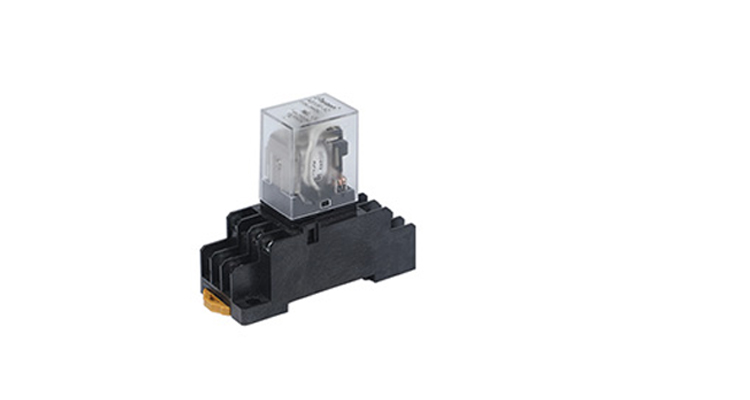
General relays conform to common international standards for footprint, pin configurations, and ratings. This standardization ensures wide availability from multiple manufacturers and makes replacement or system upgrades straightforward. The existence of socket bases further simplifies installation and maintenance, allowing relays to be plugged in and out with ease.
Conclusion
In summary, the General Purpose Relay is the quintessential utility player in electrical control. Its advantages— versatility, cost-effectiveness, electrical isolation, simplicity, robust switching capacity, reliability, and standardization — explain its enduring presence. While newer technologies emerge for specialized needs, the humble general-purpose relay remains an optimal, practical, and trusted solution for a vast array of everyday electrical switching tasks, solidifying its role as a true workhorse of automation.